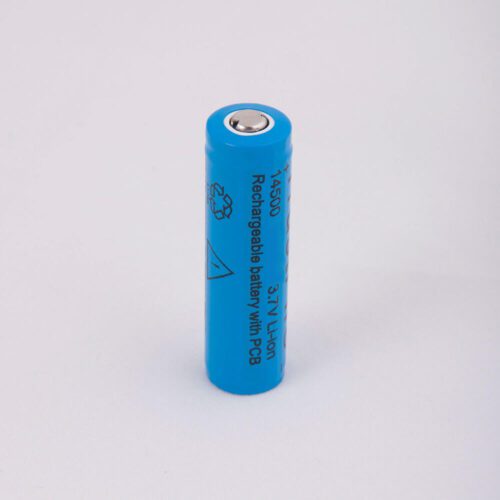

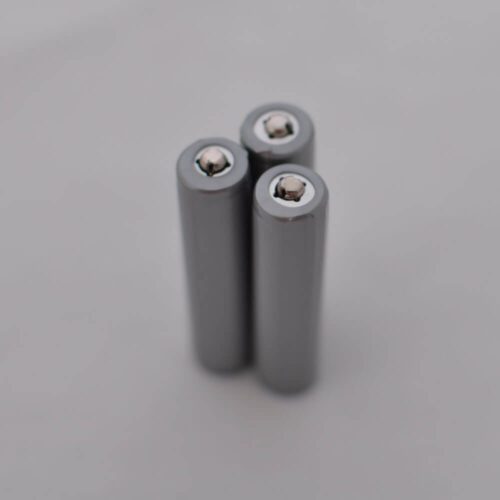
Rechargeable Hoop Battery (14500)
$6.00
Keep the glow going! Extra rechargeable batteries let you swap in a freshly charged battery and enjoy more time with your compatible MoodHoops LED hoop.
Which Hoops Use 14500 Batteries?
- Classic LED MoodHoops in 3/4″ tubing
- Classic LED MoodHoops in 7/8″ tubing made after June 2016
- PixelHoop in 3/4″ tubing
- PixelHoop Core in 7/8″ tubing
- Removable-battery FutureHoops in 3/4″ tubing made before July 2019
Older 7/8″ Classic LED Hoops: Models made before June 2016 use the larger 18650 Hoop Battery, which MoodHoops no longer stocks.
Not sure which battery you need? Compatibility depends on your hoop model, tubing size, and sometimes its manufacturing date. Please contact us before ordering if you’re unsure. You can also view our 10440 Hoop Battery.
Not Sure What Tubing Size You Have?

If your hoop was a gift or purchased secondhand, compare its tubing with the 5/8″, 3/4″, and 7/8″ sizes shown alongside familiar coins.
Click to enlarge the photo. Tubing size is only one factor in identifying the correct battery.
Important Lithium-Ion Battery Safety: Improper handling, charging, or use can cause fires and serious injuries. Read the complete Battery Safety & Care Guide before using this product. Mandatory safety instructions are also provided below.
About Your 14500 Hoop Battery
14500 Battery Size: Approximately AA-Sized
The rechargeable 14500 lithium-ion battery is approximately the same physical size as a standard AA alkaline battery. The nominal cell dimensions are 14 mm × 50 mm, although protected batteries are longer.
Important: Similar size does not mean interchangeable. A 14500 lithium-ion battery operates at approximately 3.7V nominal, compared with 1.5V for an ordinary alkaline AA battery.
NEVER insert a 14500 lithium-ion battery into a device designed for regular AA alkaline batteries. The higher voltage can permanently damage the device and create a fire or other safety hazard.
Why Protected MoodHoops Batteries Matter
MoodHoops uses protected lithium-ion batteries with built-in protection circuitry. The additional length of the protected battery is essential because our removable-battery compartments are designed to maintain reliable electrical contact with these specific batteries.
Shorter, unprotected lithium-ion batteries can move inside the battery compartment, causing the connection to break intermittently. This may cause the hoop to flicker, shut off, or turn on and off unexpectedly. Use only the correct MoodHoops-supplied protected replacement battery.
Battery Runtime & Charging
Estimated Runtime: Approximately 2–4 hours per removable 14500 battery, depending on your hoop model, brightness, colors, and LED patterns.
Estimated Recharge Time: Approximately 2–4 hours, depending on the compatible charger and battery condition.
Power-Saving Tips: Lower brightness settings and patterns with fewer illuminated LEDs generally use less power. Simple patterns with more dark space can help extend your glow time.
⚠ MANDATORY READING — Lithium-Ion Battery Safety & Care
Lithium-ion batteries can cause fires, burns, and serious injuries if improperly handled, charged, or stored. Please read the complete instructions before using this product.
We take Battery Safety very seriously – and you should too!
Only lithium-ion batteries have enough power to light up your hoop because they have three times as much power as normal alkaline batteries. That extra energy density means they can be dangerous if used improperly.
Damaged Li-Ion batteries can start a fire, burn you, or even explode.
The most important points to remember are:
- Never use a battery that appears damaged or has its plastic peeling off. The plastic keeps the battery from short circuiting and potentially exploding. If the plastic is peeling off or the circuit at the bottom of the battery is detached or falling off, discontinue use IMMEDIATELY.
- Charge Li-Ion batteries away from people, pets, and flammable materials. Don’t leave them unattended during the charging period. Do not charge batteries on carpet, wood surfaces, car seats, or plugged directly into a wall outlet. Remove the batteries from the charger and store in the provided battery case as soon as charging is complete.
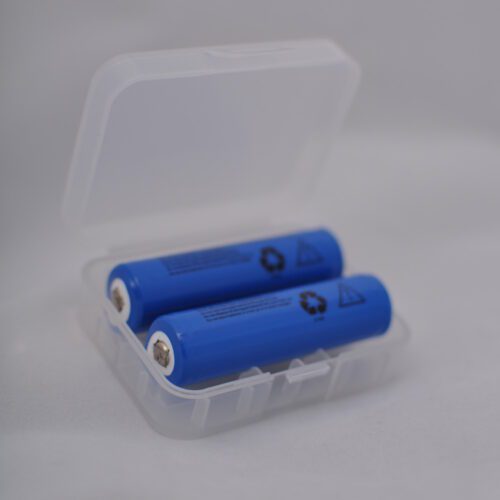
- Always store Li-Ion batteries in their case when not in use, NEVER carry them loose in a purse or your pocket. If they touch something metal like coins or your keys they can potentially explode or burn you.
- Never allow children to handle or charge Li-Ion batteries. Battery handling and charging should only be done by adults.
Li-Ion batteries are generally not sold in local stores. We only recommend using batteries from our online shop in your Moodhoop. Our batteries have special electronics built in for safety. Replace your batteries when they start to show signs of wear and tear.
Our replacement lithium-ion batteries are affordably priced, so please don't hesitate to put safety first and replace and recycle damaged batteries.
If you need to discontinue use of a damaged battery, keep it in a case or wrap it with non-metallic/non-electrically-conductive tape until it can be recycled. Call your local trash collection service to find out where you can drop off Li-Ion batteries for recycling. Sometimes damaged batteries can be recycled for free by through local stores like Lowes, Home Depot, or Best Buy. NEVER throw a damaged Li-Ion battery in the trash.
Additional safety tips:
- Never put this battery in any other device than your hoop and the provided charger.
- Inspect your batteries for signs of damage each time before use or charging.
- Never remove the outer wrapping of the battery for any reason.
- Charge the battery on non-flammable surfaces and don’t leave charger unattended.
- Once the battery is completely charged, unplug the charger from the wall and remove the battery immediately.
- If the battery compartment feels unusually hot, turn off the hoop and allow the battery to cool before discontinuing use. Do not try to remove or touch a hot battery as it can burn your skin.
- If a battery leaks any electrolyte solution, discontinue use immediately. If the solution gets on your hands, wash thoroughly with water to dilute.
- If the battery has been exposed to water or shows rust or discoloration around the positive or negative end of the battery, discontinue use immediately.
- Do not store batteries in a hot car or in direct sunlight.
- Do not store a battery inside your hoop for extended periods.
- Keep batteries away from heat and fire.
- Do not operate the charger in a wet environment.
- Keep batteries away from acidic, alkali, or other corrosive environments.
- Pay attention to the polarity (i.e. which end is positive and which end is negative) when inserting the battery.
- Never ship damaged batteries through the mail.
Get the most out of your batteries.
Battery care is a regular part of hoop maintenance. If batteries are not cared for as described it’s possible for them to expire after only a few months or even after a few uses. With proper care they can remain usable for more than a year. Regardless of care, all rechargeable li-ion batteries will lose capacity over time and eventually need to be replaced (just like in your phone or laptop).
Keep in mind the following points to maximize the life of your battery:
- Only use the provided charger with your battery.
- Do not allow your battery to sit in a completely discharged state for extended periods of time.
- Keep your batteries charged in between hooping sessions for convenience so you can pick up and play whenever you want, but do not store in the charger. Remove the battery and store in a battery case once charging is complete.
- Don’t store the battery in a hot car. Heat will rapidly diminish the life of your battery.
- Avoid throwing or dropping batteries to keep the plastic intact.
- Avoid hooping with the battery in the hoop in the off position as this can sometimes cause the plastic wrapper to peel.
- If your battery has reached its end of life, please see the above steps listed in Battery Safety for important information on how to dispose of your batteries.
Environmental factors from regular usage and manufacturing defects are out of our control and we cannot be held liable for any issues resulting from battery use or misuse, charging, handling, or storage. Use these batteries at your own risk.
Battery Care in Cold Weather
Lithium-ion batteries are sensitive to temperature, and cold conditions can temporarily affect their performance. If you use your LED hoop or other MoodHoops props outdoors during winter, keep the following tips in mind:
-
Reduced battery performance: Cold temperatures can temporarily reduce a battery's available power and runtime. Your prop may appear to drain faster than usual or turn off sooner, even when the battery was fully charged before use. Much of this temporary loss of performance may recover after the battery returns to room temperature.
-
Keep batteries warm before use: Store your props and spare batteries indoors at a comfortable room temperature until you're ready to perform. Avoid leaving them outdoors or in a cold vehicle for extended periods.
-
Never charge a freezing or near-freezing battery: Do not charge lithium-ion batteries at or below 32°F (0°C). Charging at these temperatures can permanently damage the battery and create safety risks. For the safest charging conditions, allow batteries and battery-powered props to return fully to room temperature before connecting them to a charger.
-
Protect against moisture and condensation: Moving a cold prop into a warm environment can cause condensation to form. Allow your prop to warm up and ensure that its battery compartment, charging port, and other electrical connections are completely dry before charging or opening the electronics.
-
Be mindful of cold-weather impacts: Plastic tubing can become more vulnerable to damage in cold conditions, particularly during drops or impacts against hard surfaces. HDPE tubing is generally better suited to colder environments than more rigid polypro tubing, although neither is impact-proof.
For outdoor winter performances, we recommend testing your prop under the expected conditions before the event and keeping fully charged spare batteries available when your model supports removable batteries.
✈️ Traveling with LED Hoop Batteries on a Plane
✅ Short Version (Quick Answer)
Yes, you can fly with your LED hoop and its batteries, as long as you follow some simple safety guidelines:
- Spare hoop batteries must go in your carry-on, never in checked luggage.
- Keep batteries in a plastic battery case to prevent short circuits.
- MoodHoop batteries are well below the FAA's 100 Wh limit.
- Always inspect your batteries before traveling—do not bring damaged ones.
- Hoops can be packed in checked luggage or carried on, but avoid crushing or kinking the tubing.
- If you're unsure, check with your airline or show them this FAA page.
🛑 Do not bring loose hoop batteries rolling around in your bag, luggage or purse (in general, not just at the airport), as this can start a fire if short circuited by keys, coins, or other items in the same compartment.
Always use a protective plastic battery case for your hoop batteries, like this one.
📘 Long Version: Air Travel Guidelines for Lithium-Ion Batteries for LED Hoops
Our LED hoops use removable rechargeable lithium-ion batteries in two common sizes:
🔋 Battery Types We Use:
- 14500 Battery = 750 mAh | 3.7V (PixelHoop & Classic 3/4”)
- 10440 Battery = 600 mAh | 3.7V (FutureHoop & Classic 5/8”)
🧠 Battery Watt-Hour (Wh) Calculation
To determine if a battery is allowed on a plane, the FAA and TSA limit spare lithium-ion batteries to 100 Watt-hours (Wh) or less.
You can calculate a battery’s Wh using this formula: Wh = (mAh × V) ÷ 1000
Let’s break it down:
- 14500 Battery: (750 mAh × 3.7 V) ÷ 1000 = 2.775 Wh
- 10440 Battery: (600 mAh × 3.7 V) ÷ 1000 = 2.22 Wh
✅ Both batteries are well under the 100 Wh limit and are allowed on planes.
🔹 Long Version (Full Guide with Details + Links)
🧳 Flying with Your Hoop
Plane travel with your hoop shouldn’t be a problem — many MoodHoopers have taken theirs on flights successfully! Just keep these two key concerns in mind:
- Collapsing Your Hoop for Travel
- Watch: How to Collapse Your Hoop
- Depending on the collapsed size, you may be able to:
- Pack it in your checked bag
- Carry it on in the cabin (preferred)
- ✨Tip: Avoid overhead bins if possible, or monitor it closely to prevent others from squishing it — compressed tubing can become kinked or cracked, which isn’t covered under warranty.
- Packing Hoop Batteries (Lithium-Ion)
- Spare (uninstalled) batteries must only go in your carry-on bag.
- NEVER put loose lithium-ion batteries in checked luggage.
- Always use a plastic battery case to protect the terminals and prevent short circuits.
- Find them here: Hoop Battery Travel Cases
🛅 Important Guidelines from the FAA & TSA
Here’s what you need to know:
- 🔋 Spare lithium-ion batteries must be carried in your carry-on baggage. Checked baggage is not allowed for loose batteries.
- 🧳 Installed batteries (batteries already inside your hoop) are okay in both carry-on and checked baggage, though carry-on is recommended.
- ⚠️ Battery terminals must be protected. Use a plastic battery travel case, tape over the terminals, or keep them snug in a padded pouch or original packaging.
- 🔍 Inspect your batteries before flying. Do not bring damaged, swollen, or leaking batteries.
- 🔥 If your battery ever gets hot, smokes, or expands during travel, alert the flight crew immediately.
- ❌ Batteries meant for resale/distribution are not allowed.
- 📋 Always check your airline’s battery policy, especially for international flights. Rules can vary by carrier.
🔋 Battery Specs and Safety
Your MoodHoop uses:
-
14500 (PixelHoop & Classic 3/4”):
750 mAh, 3.7V → 2.78 Wh -
10440 (FutureHoop & Classic 5/8”):
600 mAh, 3.7V → 2.22 Wh
How to calculate Wh:
Multiply (mAh ÷ 1000) × Volts
Example: (750 ÷ 1000) × 3.7 = 2.775 Wh
✅ These are well under the 100 Wh limit per battery allowed by the FAA and TSA. You're good to go!
🧳 Travel Checklist for Hoop Batteries:
- ✅ Carry spare batteries in your carry-on.
- ✅ Use plastic battery cases.
- ✅ Check batteries for damage before packing.
- ✅ Bookmark or print the FAA link just in case you need to show it to security.
- ❌ Never bring loose, unprotected batteries in any bag.
✅ Final Travel Tips
- Inspect batteries before packing — don’t fly with any that are swollen, dented, or damaged.
- Keep the hoop in a padded or protective bag if possible.
- Let security know you’re traveling with LED hoop equipment if asked.
🌈 Now you’re fully prepped for takeoff with your hoop!
📜 Official Travel Guidelines
Here are links to the official sources for lithium battery travel policies:
- FAA PackSafe – Lithium Batteries:
https://www.faa.gov/hazmat/packsafe/lithium-batteries - TSA – Lithium Batteries 100 Wh or Less in Device:
https://www.tsa.gov/travel/security-screening/whatcanibring/items/lithium-batteries-100-watt-hours-or-less-device - Regulations: 49 CFR 175.10(a)(18):
https://www.ecfr.gov/current/title-49/subtitle-B/chapter-I/subchapter-C/part-175
💡 Battery Nerd Corner (Optional Info)
Lithium-ion batteries are required to pass strict safety tests, but they still carry risk if mishandled.
A rare but serious issue is called thermal runaway, where the battery can rapidly overheat and catch fire. This may happen due to:
- Damage
- Overheating
- Water exposure
- Overcharging
- Packing incorrectly
... or rarely, a manufacturing defect.
That’s why we take battery care seriously, and you should too — especially while traveling! ✈️
Important Safety Note:
Flight crews are trained to recognize and respond to lithium battery fires in the cabin. If your hoop battery or any other device starts to overheat, expand, smoke, or burn, notify a flight attendant immediately. 🔥✋ Safety first!
You may also like…

Related products