
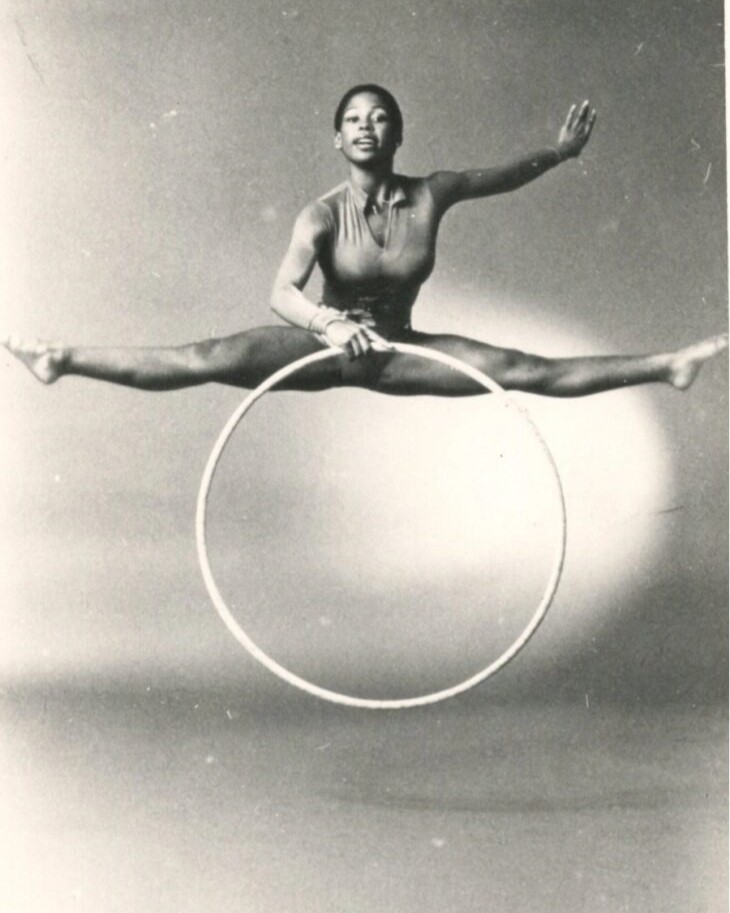
Gymnast and performer Wendy Hilliard brought extraordinary strength, artistry, and athleticism to hoop movement. As one of the first Black rhythmic gymnasts to represent the US internationally, she helped expand visibility and possibility within movement arts for future generations.
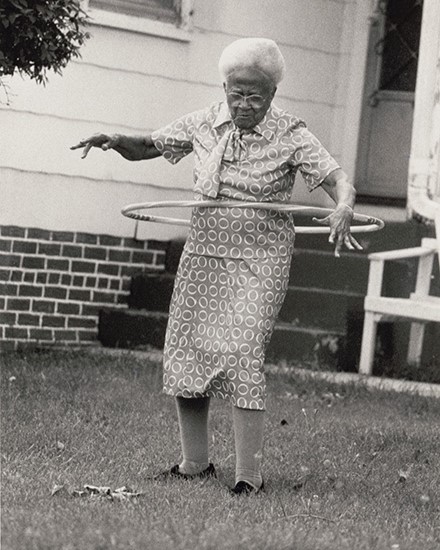
Joy does not belong to one generation. At 97 years old, Beatrice Ferguson reminds us that movement can remain playful for a lifetime.
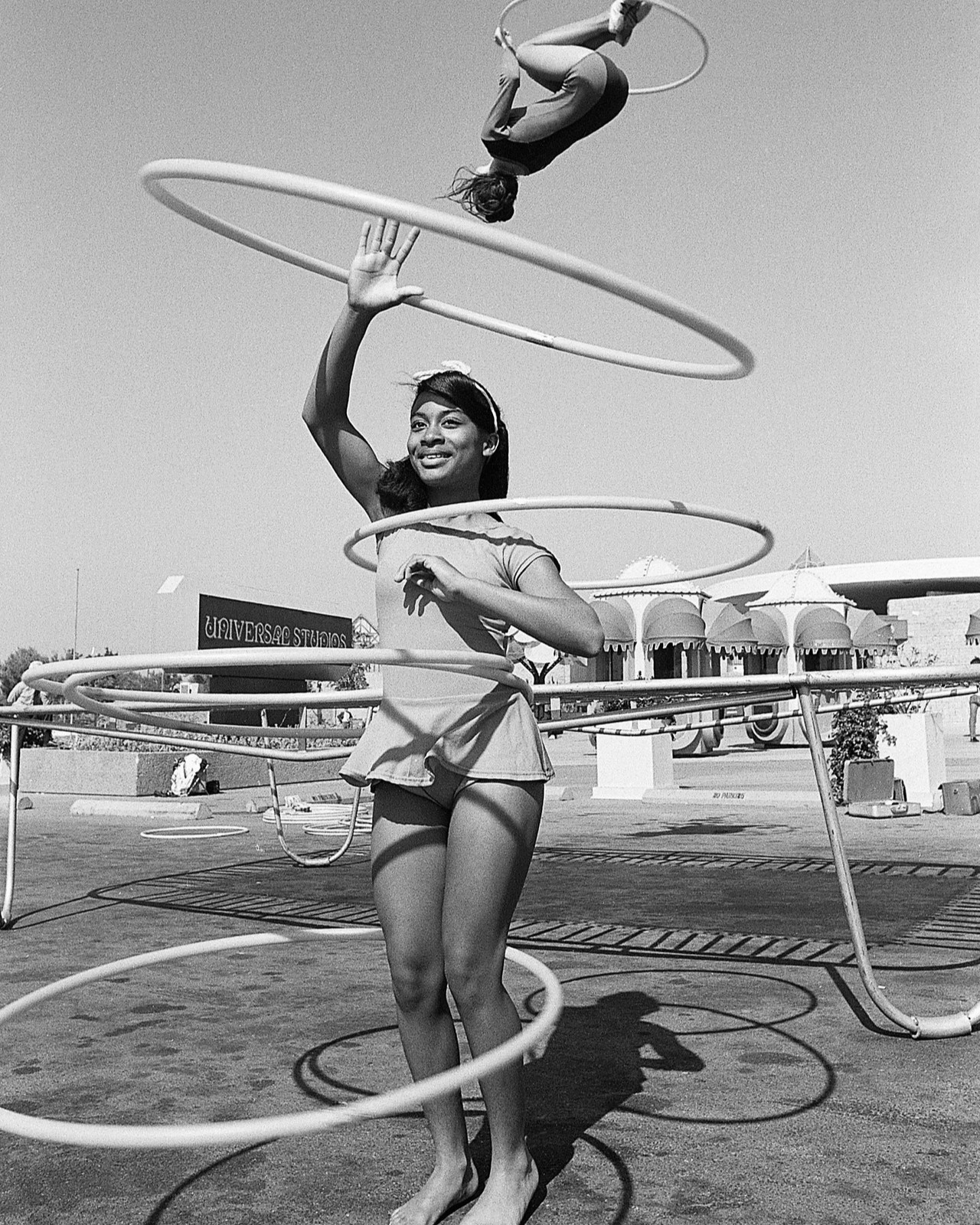
1972 National champion Sandra Gaylord brought athleticism, rhythm, and performance together in motion, helping shape the visual language of modern hoop artistry.
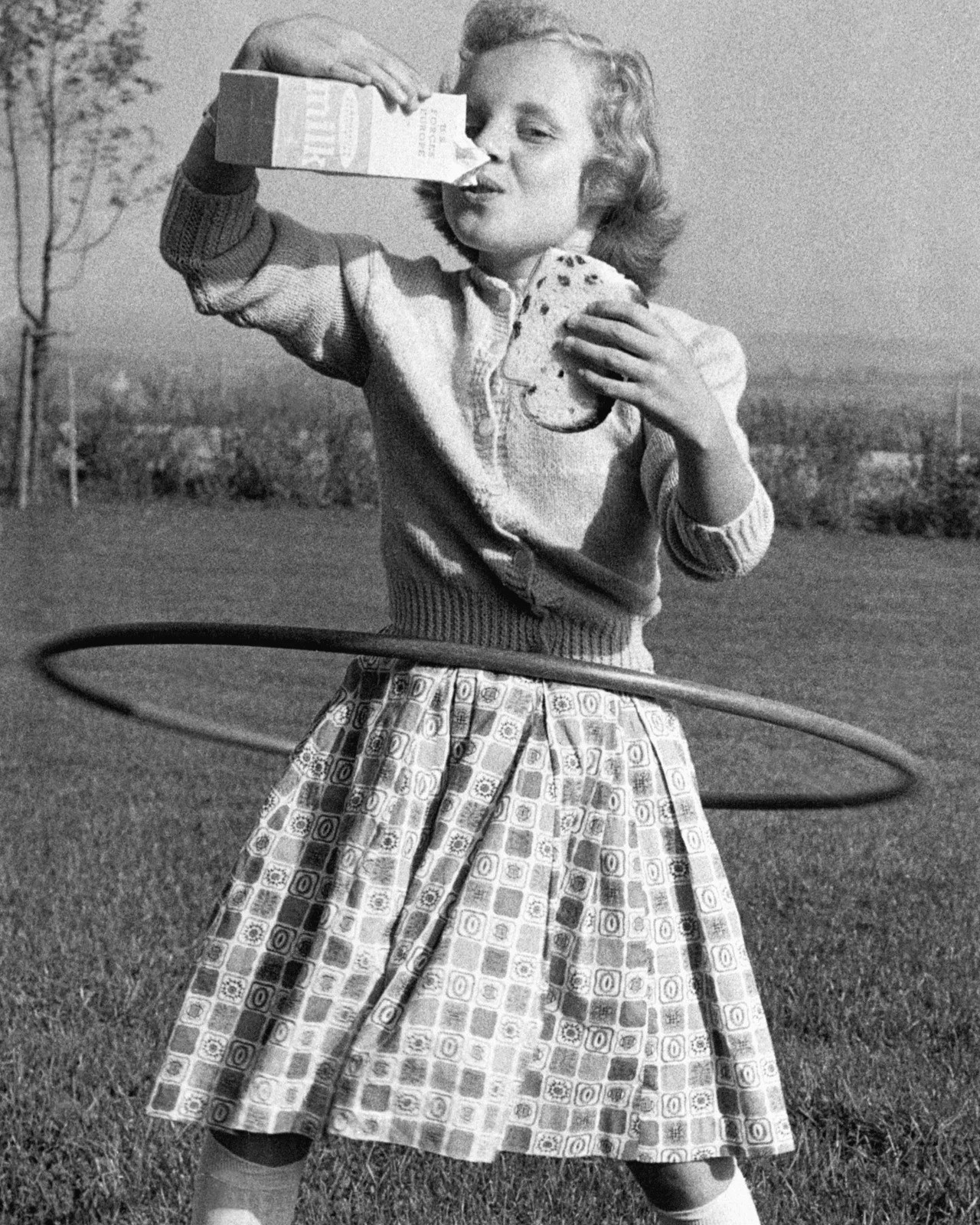
While breaking a world record, 10-year-old Mimi Jordan balanced milk, a sandwich, and a spinning hoop, turning determination into a moment of pure childhood joy and capturing the playful spirit of the hooping craze.
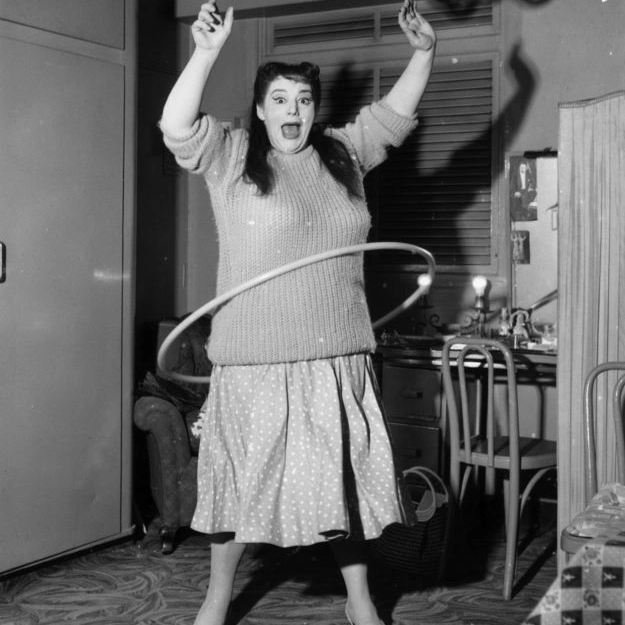
Known for her warmth, humor, and unforgettable screen presence, British actress and comedian Hattie Jacques brought her playful spirit to the hooping phenomenon that swept through everyday life in the late 1950s.
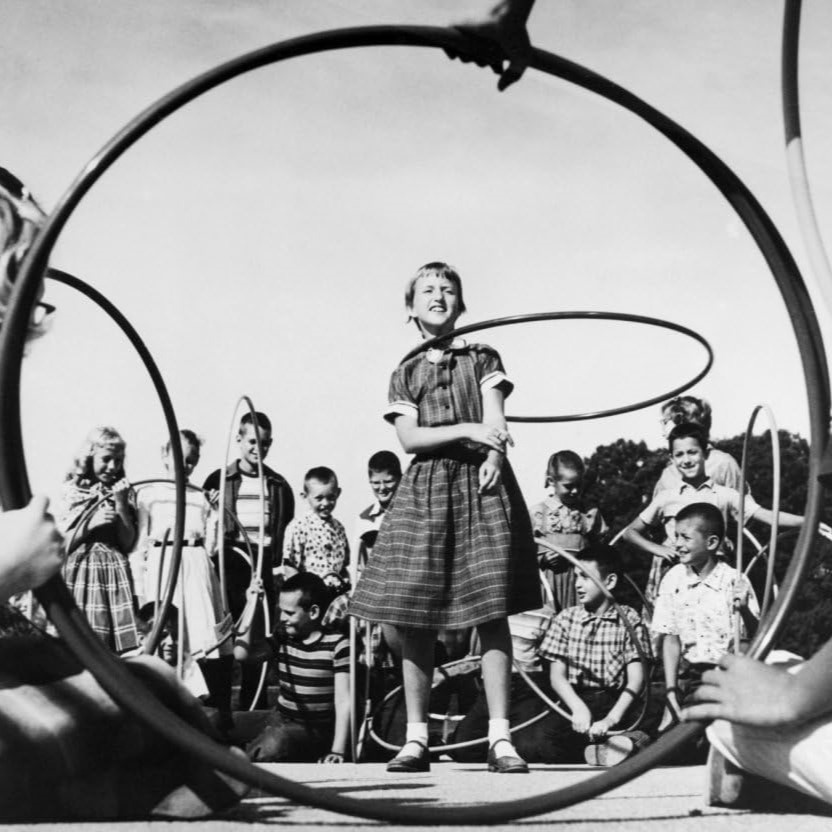
As hooping spread through schools and neighborhoods, moments of movement became moments of admiration, connection, and shared inspiration among friends and classmates.
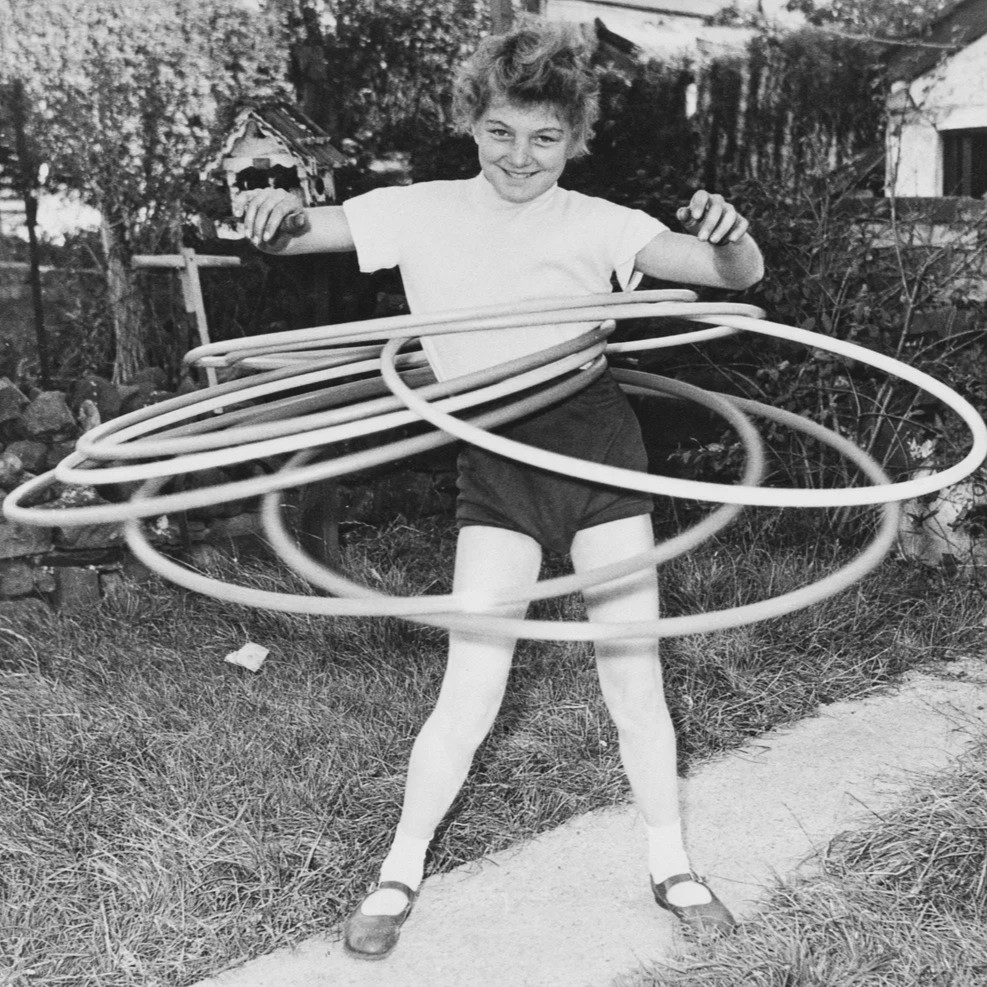
In 1958, Ann Evans of Aberdare, Wales became known for keeping seven hoops in motion at once, transforming hooping into a feat of rhythm, endurance, and joyful spectacle.
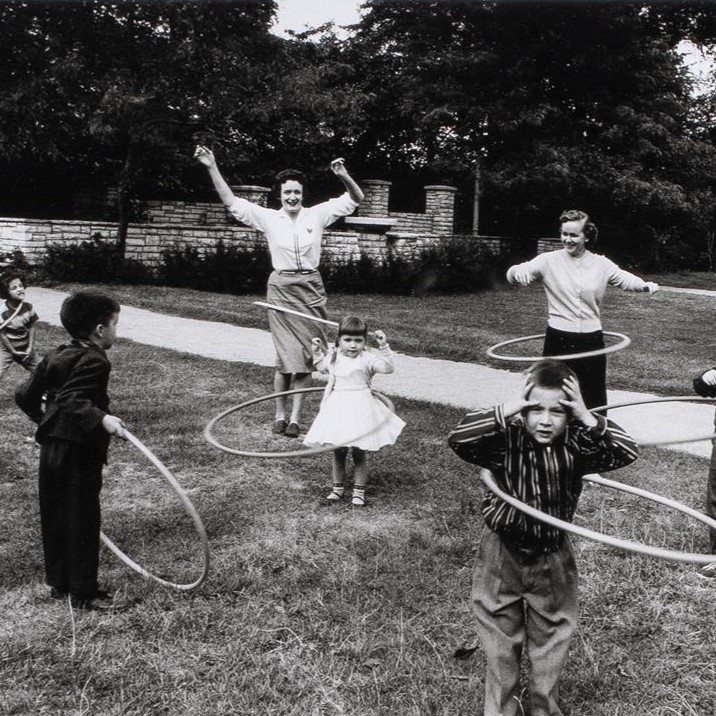
In 1960, photographer Art Shay captured families hooping together in Deerfield, Illinois, preserving a moment where play, rhythm, and joy moved freely between generations.
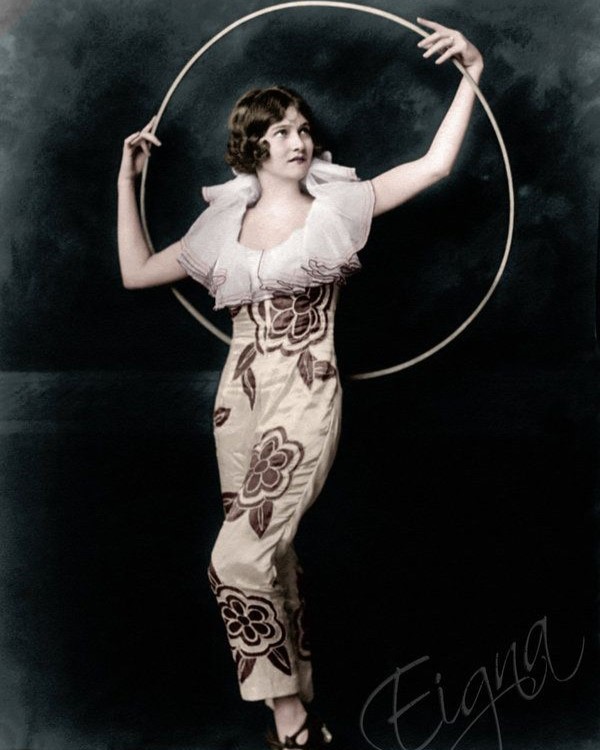
In glamorous studio portraits inspired by the spectacle and elegance of the Ziegfeld era, performer Lora Foster embodied the theatrical style and visual fascination that surrounded hoop culture in the mid-20th century.
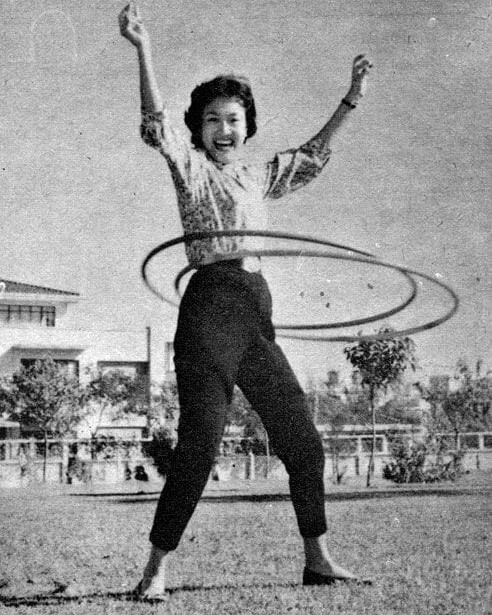
In the 1950s, Chinese actress and singer Grace Chang brought her signature charm and energy to the worldwide hooping phenomenon, reflecting how movement, rhythm, and playful expression crossed cultures and generations.
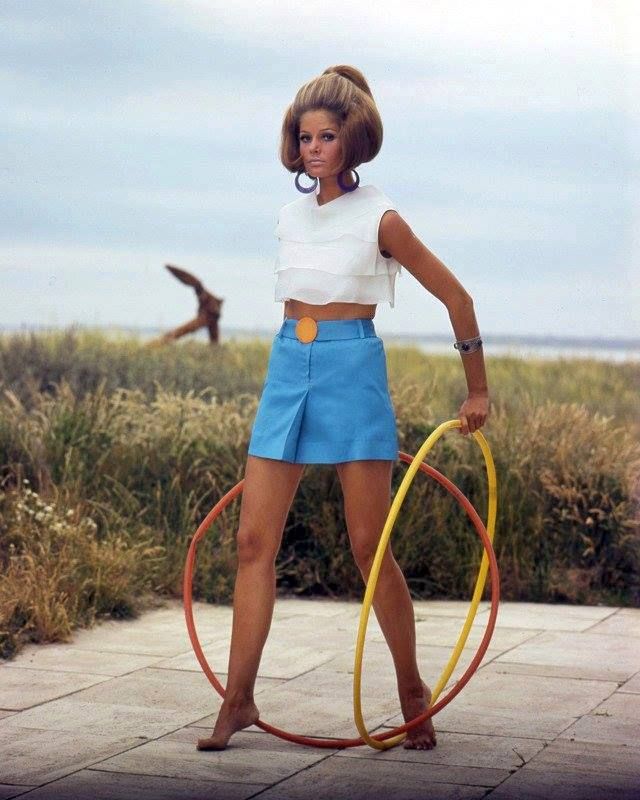
As hooping spread through popular culture in the late 1950s and early 1960s, studio portraits and fashion photography embraced the movement’s playful energy, turning the hoop into both prop and visual icon.
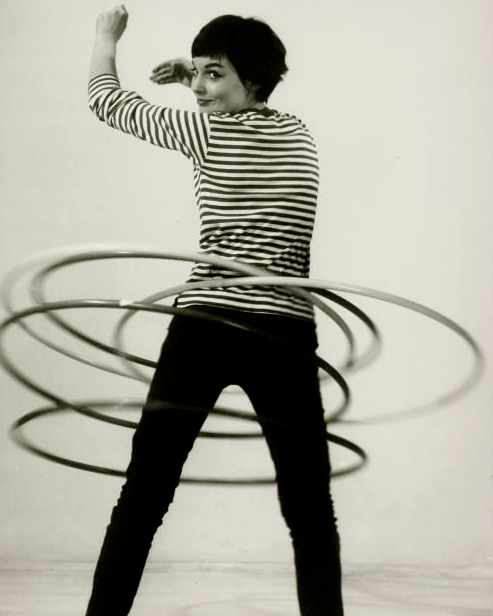
Movement becomes identity. In the studio and on the street, hooping evolved into a form of style, expression, and self-invention.